Friday, June 17, 2011

Top 10

  1. Sunrise at Rotorua:  The sunrise was so incredible.  It was so beautiful.  I am probably never going to see a sunrise like that again. Spectacular!
  2. Rangitoto College:  It was cool to get to talk to the students at Rangitoto!  I learned a lot from them and it was cool to learn the haka and other traditions.
  3. Holding a Koala:  Koalas are an Australian icon and it was so awesome to get to hold one and to get a picture.  It is something that I have always wanted to do.
  4. Swimming in the Great Barrier Reef:  I have never been so close to so many fish!  The coral was beautiful and it was cool just to be there and see it.
  5. Maori Village:  It was awesome to be able to see so much of the Maori culture.  There was so much to see.  There were also the thermal springs which were amazing.  Our tour guide made it fun though- "I was too tall to be a hobbit"  :)
  6. Aboriginal:  so cool to learn about their culture and see some of their artifacts.  We also got to try boomerangs and spears.  Saw some cool shows/movies and someone demonstrated the didgeridoo!
  7. Climbing the Sydney Bridge:  It is another icon of Australia and it was incredible to be able to climb it and to see Sydney from the top of the bridge. 
  8. Sydney Opera House:  Yet another Australian icon and it was amazing to see it up close and to actually go inside!
  9. Agrodome: Learned about some of the sheep and saw one sheared.   Got to pet the baby goats and sheep. 
  10. luge: it was so much fun going down the mountain in the luge karts. There was an awesome view of New Zealand.  Lots of fun.

What made this trip great though was that I got to experience it with some of my closest friends.  It was so much fun.  I am glad that we got to go on this once in a lifetime trip together. And I am glad that I made some new friends along the way!! :)

Thursday, June 16, 2011

Day 11- Train Rides, Koala Bears, and Boomerangs

Today we took a scenic train ride from Cairns to a little town in the mountain.  The scenery from the train was so cool.  We saw some really pretty mountains and some waterfalls.  On the train ride we also did our Inquiry.  My group did one on different colored plants.  Our question was will there be more yellow, blue or red plants in the fores? We each picked a color.  We were responsible for keeping track of how many plants of that color that we saw.  I counted red plants, jenny counted yellow plants and Kellie counted blue plants.  We did this while we were on the train.  Our hypothesis was that there would be the most red plants.  Our data was red:14 yellow:13 and blue:7.  So our hypothesis was correct.  A question that I had after doing this experiment was why are there more yellow and red plants than green plants? Some sources of error could be that we could have missed some when we were looking out the other side of the train or if we were distracted by the people around us. 

When we got to the town we ate some lunch and then we were determined to find where we could hold a koala.  Alec, our tour guide said that you could do that here so we did.  It took us a little while to find it but we eventually did.  We were all so excited!  All of us got our picture taken and got to hold it.  It was so cute and soft.  We all had big smiles on our faces.  It was one of the best moments on the trip.  I am so glad that I got to do that. 
Then we went to the rain forest tour.  We went on a gondola to get there.  The tour only lasted about 10 minutes, but we saw some really cool plants there. Then in the gondola station we saw some huge spiders.  It was cool and terrifying at the same time.  The spiders were all on the roof just sitting there but I was afraid that one would come down in front of me. 


After that we went to see some Aboriginal shows.  It was really interesting to see some of their dances and we got to see someone play the didgeridoo.  It was so cool.  We also got to see some of their weapons and got to throw a spear and boomerang.  It was a lot of fun.  Now we have to say good-bye to New Zealand and Australia.  I hope that someday I can return because this trip has been the best.  I am going to miss it.

Wednesday, June 15, 2011

Day 10- Great Barrier Reef!

We are in Cairns now. Today we went to the Great Barrier Reef!  I was so amazing.  We took a boat ride out to a little station.  The ride was about and hour and a half.  The little station was anchored down to the bottom and it had a space down some stairs where we could watch the fish through the windows.  There were also other boats that went out for other tours.  I did a lot of snorkeling today.  When we got there we went right in.  I didn't see many fish when we first got in.  I wanted to go farther away from the boat but the water was really low.  I don't like to be over the coral when it is really close to me because I am afraid I will hurt the coral and myself.  After a little while we went and got lunch.  They had a whole buffet laid out and they had some really good food.  We sat out in the sun to eat.  It was really nice to be in the sun instead of the rain. 

After lunch we went out again, but we didn't go out by the shallow coral because we had trouble with it the first time.  Plus the tide had gone down so much that the coral was sticking out of the water.  So most of us stayed by the boat where the water was deep. There were A LOT of fish by us this time.  They were feeding them so they where everywhere.  At one point someone threw food right by us and the fish went crazy.  We weren't expecting the fish and they were right in my face and hitting me.  I freaked out a little bit.  It was cool to see so many fish up close though.  I swam around there for a long time because it was such a cool experience. 


Watching the fish being fed was really cool because there were so many of them.  The coral was really cool too.  You could see where some of it had been effected by coral bleaching.  It was sad to see.  The water was really nice, but it could be a little cold at sometimes. The water was so beautiful.  The water was the perfect shade of blue and the sun was shinning.  It was the best day to go to the Great Barrier Reef.  Later I swam a little just to swim and it was really nice.  I hope I can go back to the GBR some day. 

Tuesday, June 14, 2011

Day 9- Bridge Climb and Light Show


Today we were supposed to go whale watching and climb the Sydney Bridge, but that didn't happen.  The wind was too strong for us to go out on a boat so we had to skip the whale watch.  Instead we went to the market.  It was actually really neat.  There was a huge market area in this building and they were selling so many different things: Food, clothes, shoes, bags, souvenirs etc.  It was a little like the Rocks market, but it was indoors.  I don't know which one was bigger, but they were both very cool.  I don't like to shop that much but it was still fun to go into all the shops and look at the stands.  Of course it was raining.  At least this market was inside. 

After that was over we went on the bridge climb!  I was excited, but scared at the same time.  My mom is afraid of heights so sometimes I get scared too, but it wasn't that bad.  First we were separated into two groups.  Then we got out outfits.  It was a one piece suit and we had to put pants on over the suit.  Then we were given a harness, gloves, a hat, and a headset.  We had a lot of equipment.  After we had all that we had to go onto a little practice course so that we were ready when we went on the bridge.  It was pretty easy.  The little ball thing that was attached to your harness was attached to a cable and the you just had to walk and it would follow. 

When it was finally our turn to go onto the bridge I was so happy.  I wanted to do this so that I could get over my little fear of heights.  It turns out that it wasn't that bad though.  The view was incredible from the top of the bridge.  Our guide told a few stories and took a few pictures.  The climb down though was worse than the way up because I looked down at my feet the whole time.  It was still one of the coolest things ever. 

Then after that we went to see a light show on the opera house.  It was really pretty.  The lights would change and move.  They even made a jellyfish go across.  It was  really cool.  This was an excellent day!  I had been looking forward to the bridge climb almost the entire trip. 

Monday, June 13, 2011

Day 8- Sydney Opera House, the Wildlife Center, and Independence


I think that I am more confident when traveling now.  I feel like I can travel by myself new because I know how most of the stuff works.  I think that after this trip I will not be as reluctant to talk to strangers and to do other things on my own.  I usually rely on my parents a lot when I travel, but this trip has made me become more independent when traveling.  There are some things that I wouldn't be able to do when traveling by myself.  I think that I would get lost a  lot and I would lose my confidence if I got lost.  I can be a little frantic when I don't know what I am doing.  I think that I could go through the airport by myself though.  When I travel by myself thought I don't think that I would get much out of it.  I wouldn't get the full experience if I traveled by myself.  I would miss out on a lot of the cultural/historical things of the country.  I think that right now I am too shy to travel alone.  I need to become more outgoing before I can travel by myself, but I am working on it.  I also think that when I travel I like luxury too much.  I am used to skipping an activity because of the rain and things like that.  I would need to do things regardless of rain or shine.  I think I could travel on my own, but I think it would be better if I first improved my confidence, make sure to get the full experience, and be more outgoing. 

So today we did a lot of amazing things.  The first thing that we did was go to the Sydney Opera House!!!  It was so awesome to be at the Opera House.  Before we had just seen it at a distance, but now we have actually been up close to it.  The building is so cool.  I love the way the building looks it is so amazing!!  And we actually got to go inside too.  It was one of the most fantastic things I have ever done.  I was a little disappointed that we couldn't see more of the building though.  You had to go with a tour. 


KOALA!!

So then we did a little bit of shopping on our way to boat dock.  We took the boat around the harbor.  It went past the Sydney Opera House and then took us under the bridge to another dock where we got off.  There we went to the Wildlife center.  It was really cool.  I saw lots of bugs and animals.  I got to see Koalas and Kangaroos!!  It was so exciting because those are the animals people usually associate with Australia.  They had a lot of lego sculptures in the Wildlife Center.  It was cool.  Then after that we got to eat dinner there.  I had a burger and it was really good.  Another fantastic day in Australia.

Sunday, June 12, 2011

Day 7- Reflection on Traveling


I think that this travel experience was a lot different.  I went out of my comfort zone a little bit because I usually travel with my parents and this is the first big trip I have been on without my parents.  This is actually the biggest trip I have ever been on.  It has definitely made me feel more independent from my parents.  Another thing I have done to expand my comfort zone is talk to new people.  I usually stay with my group of friends, but this has made me talk to people I normally wouldn't talk to.  I hope that after this traveling experience I can do that at home. Talk to people and hopefully make some new friends.  I am also currently trying to be more outgoing.  I am reluctant to do things on my own and I worry too.  I worry about everything that could go wrong and I hope I will be able to handle stressful situations better.  This trip was actually the first time I have really sat next to a stranger on a plane when I was by myself.  It really pushed me because I normally am very shy and do not like to talk to complete strangers.  Traveling like this has made me go with the flow a little bit more too.  Instead of complain and mope about being wet and tired I try to make the best of it. This is a once in a lifetime experience and I want to get a lot out of it.  This trip has taught me to live in the moment


Hiding from the Rain
Today we went on a bus tour through Sydney.  It was raining again.  It was still fun though.  We went to a lot of different spots.  We went to another spot were we could take pictures of the Sydney Opera House and the Sydney Bridge.  We also got to go to Bondi Beach.  It was really pretty and the waves were huge.  There were a few surfers out in the water, but I don't think they went out too far.  I took a lot of pictures on the beach.  We also went to this really cool rock lookout place that looked out over the ocean.  It was so cool, but we were being pelted with rain the entire time.  We also went around some of the neighborhoods and saw some different house styles.  It was a very laid back day and I really enjoyed it. 

Saturday, June 11, 2011

Day 6- We're in Sydney!!

Sydney Tower
We are finally in Australia!  We are in Sydney.  Sydney is different from other cities that I have been in.  I think that Sydney is a very busy city.  There are a lot of people walking around on the sidewalks and it can be very chaotic.  In Chicago I think there is more car traffic than people walking on the sidewalks.  In Sydney there are definitely less cars going around.  Sydney is also very different from what we saw in New Zealand.  New Zealand seems very laid back and mellow, but here everything happens so fast.  In Sydney I feel like there are more that old yet modern look to them and in Chicago I think that there are more skyscrapers and less buildings that have the old architecture look to them.   I think that it is cool that in Sydney their crosswalks beep to let people know when to cross.  I don't know if those are in Chicago though.  There is also a sky walk building in Sydney where you go up and can look at the city from up in the building.  It was awesome to see Sydney from up high.  There was a good view of the harbor, bridge and other parts of the city.  It is similar to the Series Tower in Chicago where you can go up and see the city.  I think that there are also more street performers and markets in Sydney. I don't think that you see many of those in Chicago.  We saw a really cool jump rope performance today.

Sydney Opera House


Today we just kind of walked around Sydney.  We went to eat and then go up the Sydney Tower.  I think I went to a Chinese/Asian food place and it was really good.  The honey chicken was delicious.  There were a lot of Asian food places in Australia.   We also went to where we could see the Sydney Opera House and the Sydney Bridge.  It was so cool to see them because the are Australia icons.  They are what you see on television and on postcards and it was amazing to be able to see them in person.  We also went to an opal place.  We watched a short video and then we got to look around the store.  Opal is very expensive.  Then we went to the Rocks market.  It is a big outdoor market that sells a lot of things.  I didn't buy much, but it was still cool to be there just to see it all.  While we were at the market it started raining.  It wasn't that bad.  Half of us ended up walking back to the hotel.  It was actually kind of fun.  It was so fantastic day, but so far I like New Zealand just a little bit better. 
Sydney Bridge

Friday, June 10, 2011

Day 5- Redwood Forest and Kiwis

Morning: 
This morning it was raining! We went to the bus stop so that we could go to the redwood forest to hike.  Half of our group got on one bus and the other half had to wait for the next one.  I went with the first group.  We went on some trails through the forest.  I felt like we were going really fast we didn't really have anytime to stop and look at the trees.  Most of the time is was focusing on not falling/slipping in the mud.  It was also raining pretty hard so no one really wanted to stop and look around.  Some of the guys started singing 99 bottles of beer on the wall.  They actually finished the song.  I wish I could have seen more of the forest though.  The glimpses that I did see were really cool.  We ended up having to wait for the other group for a while.  At the end of the hike there was a lot of standing in the rain and waiting.  Everyone was soaking wet after that. 
Afternoon:
After resting up and drying off at the hotel, we got on a bus to Auckland to see the Kiwis at Rangitoto college.  We got to see some of them preform the haka.  It is supposed to be scary/intimidating and it was.  We sang the USA national anthem for them and we sang Happy Birthday for two people too.  We are not very good singers.  Then we got to eat some food and talk with our pen pals.  My pen pal got me Pineapple Lump and some chocolate.  It was really nice.  We also got to take a walk around the campus.  My favorite thing though was getting to learn the haka.  It was so cool to get to learn a part of the Maori culture.  I learned a lot today.  It is our last day in New Zealand. I will miss it, I love it here. 

Thursday, June 9, 2011

Day 4- Ducks, Sheep, and Maori Culture

Morning:

This morning when we woke up there was a beautiful sunrise.  It was gorgeous.  It was right over the lake and steam was coming off the lake and out of the mountains. There were birds flying everywhere and there were a lot sitting on the sulfur flat. I didn't want it to end.  We don't get a lot of views like that at home.   


World War II Duck
After we looked at the sunrise we went on a Duck Tour.  We got into World War II vehicles that could drive on the road and go in the water.  We heard about some of the legends/myths that are associated with some of the lakes and it was very interesting.  I like to hear those kinds of stories.  We heard one story about two lovers crossing the lake to see each other and there was another where some people saw Maori people in a waka(boat) and it is supposed to be an omen for bad luck.  Then a few days later, the volcano erupted.  We also learned about some of the houses around the lakes.  Very awesome tour. 

Carved House
The ducks then dropped us off at the Maori Village.  I was really excited about this.  We got to learn a little about their language and some famous/important people to the Maori village.  In the village there was a carved house and it was really interesting because our tour guide explained to us that each piece of the house represented something and they were made to resemble a person.  There are baths and mud pools that use the thermal energy in the village.  They even cook with the thermal heat.  It was really amazing to hear about their culture. 


Afternoon:
This afternoon we went to the Agrodome.  There we saw sheep, cows, ducks, dogs, and rabbits.  They showed us a lot of different kinds of sheep and they were all displayed.  Then the host shaved one of the sheep as a demonstration.  Then a few people went up to milk a cow.  We also got to see some dogs heard some ducks and sheep.  There were also little baby goats and sheep.  They were really cute.  I liked the Agrodome a lot more than I thought I would. 


After that we got to go ogoing!  I actually didn't do it though because I didn't have my swimsuit and I thought that it was a little cold to do it.  It looked really cool though.  It is a big ball with a smaller one inside and they fill the inner one with a little bit of warm water then they go down the hill.  It was a really cool idea.  They also had a stationary one.  It was fun even though I didn't do it. 


Stationary ogo

Dinner tonight was really cool.  We got to have a hangi dinner and see a little show.  We saw some dances and songs.  The guys got to try the haka and the girls got to dance a little.  The food was really good. They had some food that was the same as American food, but there was some that was really different too.  It was a very good day.  I am glad that we got to do so much.  


Wednesday, June 8, 2011

Day 3- In New Zealand at Last

We arrived in Auckland, New Zealand!  It was so weird to think that we were in another country, but it didn't really feel like we had left the US.  The first thing that we did was take a very long bus ride to get to Rotorua.  I wanted to sleep so bad, but I didn't want to miss anything.  Everything was so pretty and green.  New Zealand is beautiful.  We also saw a lot of cows and sheep along the way.  :)

Today I experienced a few culture shocks.  One shock that I experienced was that there was so much farm land. I was almost everywhere and there were so many cows and sheep.  It was all so green there were so many hills.  I was definitely surprised by the amount of farm area.  Another shock that I had was that in New Zealand they drive on the left side of the road.  It was so weird because I was used to the driving on the right.  It is strange that in most parts of the world people drive on the left, but in America we drive on the right.  It was a little scary because I usually looked the wrong way before crossing a street.  The last shock that I experienced was that in New Zealand they had a lot more dedicated to their native people.  In America I feel like our natives are just cast aside, but they had a lot of Maori culture there.  It was really cool to see that and a lot of their history is really interesting. 


For lunch we stopped in Hobbiton.  It was so much fun.  I am a Lord of the Rings fan and it was so cool to see a smegol statue and to see all the landscape.  I stopped in a little cafe/bakery with some of my friends.  We were so confused.  We didn't know if we served ourselves or where to pay.  It was a little embarrassing, but we figured it out eventually.  All three of us ended up getting New Zealand pies.  They are like portable pot pies.  I got a chicken one and it was really good. 


Part of Luge course
We went to a luge place today.  It was so much fun.  We went up a mountain in a gondola, the view was spectacular and the weather was perfect. It was not too hot and not too cold.  Then we got to go down the mountain on these little carts. You sit in it and then you would pull back on the handle bars to slow it down and push forward to go faster.  I had so much fun doing that.  There was a lot to see going down the mountain, but I mostly concentrated on not crashing. There were a few people who got scrapes and bruises doing this.  Once down the mountain you go on a lift back to the top.  I ended up doing only the beginner course, but it was fun. 

After the luge we all went to a jade place.  There we got to learn about where and how they get their jade.  We also got to see the steps required to shape the stone into jewelry.  It was really neat.  We got to look around the jade store after the presentation was over.  There was a lot of beautiful carvings and jewelry there.

When we were done at the jade store we went to our hotel. It is nice because it is right next to the lake, but it smells awful. The sulfur makes it smell like rotten eggs.  I hope that I will get used to the smell.  After checking in at the hotel we walk to a burger place that had a pizza hut next door.  Some people went to the pizza hut, but I went to the burger place.  It was called Burger fuel.  Their burgers are soooo good.  They were delicious and they were massive.  Yum. 

So we got off to a good start in New Zealand.  I am really looking forward to seeing the ogoing and the Maori village.  I can't wait. 

Tuesday, June 7, 2011

Day 2- More travel

Today we were in the plane all day again.  We actually lose this day in travel because we go over the international date line. We took the long flight from LA to Auckland.  I slept most of the way there.  I was so exhausted from all the travel we have been doing.  I was sitting next to a stranger on the long flight, but then she moved to a different seat to have more room and she never came back.  So I got two seats to myself which was nice.  Our group got asked a lot of questions in the airport and on the plane: "Where are you going?" "where are you from?" etc.  We answered lots of questions the last few days.  I am getting more excited now that we are actually on our way and almost there.  I can't wait to see New Zealand.

Monday, June 6, 2011

Day 1-Travel Day

Today we finally left for New Zealand!!  When we were waiting for the bus to come, I wasn't very excited.  It didn't really set in that we were actually leaving.  The bus ride to the airport was short, but it was so hot.  I can not wait for New Zealand weather.  It is their winter so it is about 50 and 60 degree weather.  When we finally got to the airport I thought that we were going to have a lot of time to sit in the terminal, but we ended up waiting in line to get our tickets for a long time.  All the extra time that we had came in handy.  Then we finally got onto the plane and began our long flights. 

Thursday, June 2, 2011

Food & Cuisine

Cooking and preparation techniques

In New Zealand they have many different cooking techniques.  To get the smoky flavor in their traditional Maori hangi they cook it in the ground.  They dig a deep hole, line the hole with red-hot stones and cover it with vegetation.  The food is then placed in the hole and then sprinkled with water and sealed with more vegetation.  The hole is then filled with earth and left to cook for several hours. 
Cooking on a hangi Other preparation techniques preformed by the Maori people include roasting, and, in geothermal areas, boiling or steaming using natural hot springs and pools.  In non-geothermal areas food would be boiled by putting hot stones into a bowl of water and the food.  Some food was also cooked over the open fire.  They also preserved there food using smoke, air drying, or layers of fat.  Maori people were one of the few people who had no alcoholic beverages. 


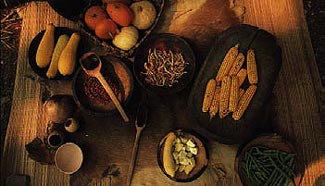
In the United States the Native Americans utilized a number of cooking methods.  Grilling and spit roasting over the fire were common methods.  Many times they cooked their vegetables directly in the ashes of the fire. Due to the lack of pottery, the Native Americans  developed a technique called "Stone Boilers".  The American Indians would heat rocks directly in a fire and then add the bricks to a pot filled with water until it came to a boil so that it would cook the meat or vegetables in the boiling water.  This is very similar to the technique used by the Maori people. 
Another method of cooking was to use a empty bison stomach and fill it with desired ingredients and suspend it over the fire.  They also created ovens made of adobe called hornos.  These ovens were used to make breads from cornmeal.  The Native Americans also dug holes in the ground to cook similar to the way the Maori people would. 

I am very excited to try some of the food in Australia and New Zealand.  I am usually a very picky eater and I would like to try some unusual foods while we are there. I am interested to see how the food in New Zealand and Australia differs from the food in the US.  I want to see if the taste of the food is different or similar.  I am curious to see if I will like any of the food that they have there.  I am a little nervous that we will get some food that is really strange or is not something that we typically eat in the US.  But I am going to try to be open to new things on this trip! :)
Monday, May 30, 2011

Rabbit Proof Fence

In Chapter three of The Rabbit Proof Fence the Aboriginal Population faces cruelty from the European settlers.  Their land was taken from them and they were cut off from their natural food source.  This violates the the Human rights because the Aboriginals were not able to own land.  According to the Declaration of Human Rights people have the right to own property.  The Aboriginals were also forced to learn the Europeans laws.  When laws were broken the Aboriginals would be sentenced to imprisonment and many were never seen again.  This violates the point of equality before the law and right to a public hearing.  The Aboriginals were given a different set of laws to follow and when those rules were broken they were punished without a proper hearing.  The Aboriginal people were prevented from practicing their beliefs.  "They had to fight to find ways to return to their secret and sacred sites to preform their dances and other ceremonies hat were crucial to their culture and whole way of life." The Aboriginal people were kept from their beliefs.  This is a violates the Human Right of freedom of belief and religion.  The colonists took many things from the Aboriginals and gave little in return.  "The Aboriginal social structure was not only crumbling, but it was completely destroyed." The European settlers took advantage of the Aboriginals for their own gain and even used the Aboriginal people as servants.  The way they were treated was cruel and unjust.

The "civilizing" of Australia mirrors historical events in the United States because, much like the Europeans in Australia, the European settlers in America took land from the Native American people.  They had no regard for their beliefs.  The American settlers took away land that was sacred to the Native Americans and the natives were no longer able to practice their beliefs.  Like the Aboriginal people, they gave much to the settlers, but got little in return.  They were promised thing such as food and clothes, but often times these thing s came in poor condition. Manifest Destiny also pushed the Native Americans from their land.  The settlers believed it was their destiny to occupy all the territory between the Atlantic and Pacific Oceans. 

I think that it was a terrible thing to relocate children of mixed decent.  No one should have to be torn away from their families.  The government should not be able to interfere with a parent raising their children just because they are of mixed decent.  It is cruel to separate them from their family and their religion.  The children then don't know where they fit in to society.  The government should not have relocated those children even if they thought it was for their benefit. 

Tuesday, May 17, 2011

Invasive Species

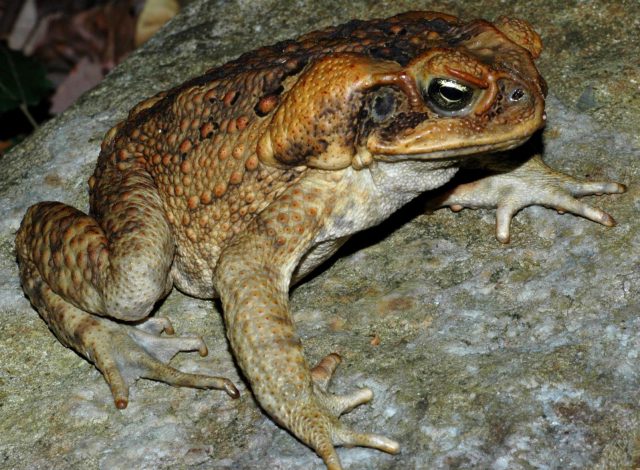
Cane Toads(Rhinella marina) eat almost anything they can swallow, including pet food, carrion and household scrapes, but most of their food is living insects.  Adult Cane Toads are active at night during the warm months of the year.  During the day and during cold or dry weather they hide in moist crevice and hollows.  They can survive the loss of up to 50% of their body water and can survive in temperatures from 5 degrees Celsius to 40 degrees Celsius.  They are found in habitats ranging from sand dunes and coastal heath to the rain forests and mangroves, but they are most abundant in open clearings in urban areas and in grassland and woodland.

Cane Toads are native to Central and South America.  They were introduced to Australia in 1935 when more than 3000 toads were released into sugar cane plantations in northern Queensland.  They were meant to control the French's Cane Beetle and the Greyback Cane Beetle, which were causing damage to sugar cane crops.  Unfortunately, the toad did not control the insects and became one of Australia's most highly invasive species.  They currently occupy over 500,000km of Australian mainland with densities reaching up to 2,000 toads per hectare when Cane Toads first colonize a new area.  They have recently spread throughout Northern Australia.

The main problems that the cane toad are causing are that when other wildlife tries to prey on them, they release a toxin from their glands that is fatal to the wildlife in Australia.  The toads are poisonous at all stages of life which is a big problem for native animals in Australia.  The toad is also a threat to beneficial insects such as the dung beetle and bees.  Native animals also battle the cane toad for food and other resources.  Diseases carried by the cane toad are also a threat to the wildlife in Australia.  They also clog drains, fouling water holes, drinking troughs and swimming pools.

For many years the Australian government has funded research for a biological solution to control the cane toad.  Some suggestions to rid Australia of the cane toad include using a virus to interfere with metamorphosis, the introduction of sterile males into the population, using sex pheromones to attract toads and lure them into a trap, and using a lung parasite to weaken the population. However they have not come up with the answer to the toad problem.  They have also designed a fence that keeps the toads out while allowing other wildlife to pass through.

Asian citrus psyllid - USDA, ARS Photo LibraryOne invasive species in America now is the Asian Citrus Psyllid (Diaphorina citri).  This insect is native to Southern Asia and was introduced to the US in 1998.  It possibly arrived to America on imported plants.  This animal damages citrus plants by feeding on sap.  It also serves as a vector for citrus greening disease which causes a decline in citrus production.  They have been found throughout the Southern U.S. including Florida, Texas, Georgia, Mississippi, South Carolina and California.  Some ideas to help control them are, insecticide which is shown to control the population and control the rate of spread of the disease.  The goal is to reduce, but not eliminate, the psyllid population. 

Invasive species are definitely something to be concerned about.  They damage the native wildlife and sometimes even cause a species to become extinct.  People need to be aware that invasive species are a big problem.  There needs to be more care when traveling from one place to another to make sure that invasive species are not being spread.  Australia and America both have invasive species and do as much as they can to keep them under control, but something needs to be done before even more damage is caused.  A solution needs to be developed to control invasive species all over the world. 

Saturday, April 30, 2011

Youtube video blog 2

Video #1: What is "Coral Bleaching"
1. A polyp is a coral larva that finds a place to settle. When a polyp grows it resembles an upside down jellyfish.  To be considered "coral" the polyp must have zooxanthellae, the polyp then grows and multiplies. Hundreds of polyp form a colony that we call coral.
2.Coral is very sensitive to change.  A couple of degrees difference in temperature can put stress on the coral.
3. When the zooxanthellae leaves the coral when the temperature increases, and the coral loses its color and food supply.  This is called coral bleaching.  When temperatures stay warm for too long the coral will die.
4. Scientists believe that coral bleaching is occurring more now than ever because of climate change.  Our daily activities, such as driving, are causing climate change and are putting coral reefs at risk.
5. To reduce climate change people can do things such as turn off unused appliances, avoid using a car whenever it's not necessary, and reusing &recycling products.
Video #2: Why should we care about climate change/destruction of coral reefs?
1. The Great Barrier reef is home to:
-15 hundred species of fish
-360 species of hard coral
-one third of the world's soft coral
-22 species of sea birds
-32 species of shore birds
2. Climate change is responsible for warming our oceans.
3. Increased flooding pollutes the reef. Fish move to cooler offshore waters and this means less food for sea birds.
4 People can reduce climate change by:
-buying environmentally sustainable products
-opening windows instead of using air conditioners
-drying clothes on the line
Video #3/#4: Educating children about the effects of climate change.
1.This type of media is beneficial because it is informational, and it is good for teaching children about the reefs.  Some drawbacks are that it is childish and is not as good for informing adults about the effects of climate change, and some of these videos lack important information. 
2. Adults from Australia: http://www.youtube.com/watch?v=QQbRjE_c25w&feature=related  I thought this video was good for Adults from Australia because it is informational and it talks about the effects on not only the coral reefs, but the entire world as well.  They probably know a lot about the effects it has on the reefs and this video provides more of an overview.
Foreigners not from Australia: http://www.youtube.com/watch?v=526n0WhyJGQ  This video is good because it it short and to the point.  It provides a lot of information on the harmful affects of climate change for those who may not know much about it.
Tourists visiting the Great Barrier Reef: http://www.youtube.com/watch?v=60jof35WuAo I thought that this video was good for tourists because it provides an explanation of coral bleaching in general and then goes into specifics on the Great Barrier Reef.  It reminds me if a video you would see at a tourist destination.


Youtube video blog 1

1. The Great Barrier Reed is considered to be the "largest living structure on earth".
2. To make solid tentacles, coral extracts calcium carbonate from the ocean.
3. Much of the construction of the coral is due to red algae.  It acts like pink glue and cements fragments of shell, sand and coral with sheets of calcium carbonate.
4. The Great Barrier Reef was established as a national park in 1975
5. About 33% of the reef is protected from fishing.
6. Scientists believe that the current reef is about 20 thousand years old, but they have found that the ancient coral is about half a million years old.

Thursday, April 14, 2011

Saying Sorry

The Aboriginal people were isolated from the world until 1788, when the English arrived.  When the British arrived there were about 300,000 Aboriginals in Australia and there was about 250 languages spoken.  Since the Aboriginal people did not have a government, the British quickly took over.  The British brought disease and foreign animals overseas with them.  Many of the Aboriginal people became sick with diseases like small pox and measles, and the foreign animals destroyed their land.  Aboriginal people were forced to move elsewhere. 

Although there were laws passed in every state to protect the Aboriginals, they were still given restrictions.  There were restrictions for owning land, where they could live, and who they could marry.  This is very unjust because it was originally the Aborigine's land and then the British came and took it for themselves. 

The stolen generation was a government policy in which 1 in 10 of all Aboriginal children were taken from their families in an effort to "civilize" them by placing them in white society.  The government expected that over time they would lose their heritage.  The stolen generation lasted from 1910 to 1971.

Being part of the stolen generation can greatly impact your life.  Many of the children who were part of the stolen generation were physically and sexually abused.  Because of their terrible childhoods, many people of the stolen generation turned to alcohol and violence. These hardships throughout their lives often resulted in early death.  Families who had children taken away from them suffered as well because the policy broke spiritual, cultural and family ties. 

Many of the people who were involved in the stolen generation and are still alive today suffer greatly.  They suffer from post traumatic stress, depression and anxiety because of their experiences.  Those who visited their birthplace can feel cultural alienation.  Many who have their own children don't know how to parent in either the conventional Aboriginal or non-Aboriginal way and some have their children taken away by welfare agencies. On May 26th, every year, the people in Australia celebrate Sorry Day- the day when Australia made an official national apology of the Aboriginal people.

An official apology needed to be made because the Aboriginal people suffered because of the white Australians.  They tried to get rid of the culture by taking their children and hoping their heritage would eventually vanish.  This event was very traumatic and it will continue to impact the lives of those involved.  Australia owes the Aboriginal people an apology for all the harm they have caused.


Thursday, March 24, 2011

"Savor the Trip, Don't Tweet It"

In this article, the author Elliott Christopher expresses his concerns about the use of technology when traveling.  He believes that people spend too much time with their phones and cameras that they don't get the full experience of the trip.  To make the trip more meaningful he suggest that people limit the use of technology when traveling.  He says that when we use technology, "it trivializes travel, turning it from a much-needed, multisensory recreational experience into fleeting and utterly forgettable entertainment." I am very excited to go on this trip.  I am looking forward to this new experience and I hope to learn a lot on this trip.  When I read this article it really made me think about how much I use technology on a trip.  On previous trips, I always came home with hundreds of pictures and after reading this I wonder if I actually got the full experience on those trips. I believe that on this trip we should really try to limit the use of technology.  I still think that we should be able to take pictures, but I think we should try to take pictures that are more meaningful.  Instead of taking pictures of every little thing, we should try to capture the moments that we don't want to forget.  We also shouldn't be allowed to use our phones.  I think that if we use our phones we will be too busy using them and we would miss everything that is going on around us. We shouldn't be concerned about what our friends are doing and we shouldn't have to share what we are doing at that exact moment.  There will be time for that later. We should be living in the moment.  I don't want to be like some travelers who "see the world through the tiny screens of theirs smart phones before they bother looking at the real thing".  To get the full experience there should deffinately be a limit on the use of technology. 

Sunday, February 27, 2011

Australia, New Zealand, USA Timelines

Photo: The Simpson Desert There are many similarities between Australia, New Zealand and the US.  The first point highlighted on the timeline was in 1770 when Britain claimed Australia and settled the first six colonies in 1788. In 1769 an English explorer made expeditions to New Zealand, but did not create colonies.  His journals inspired other Europeans to explore New Zealand.  This is very similar to what happened in America.  In 1606 the London Company sponsored a colonization expedition to Virginia and in 1607 Jamestown was founded (http://www.historyplace.com/unitedstates/revolution/rev-early.htm).    England would end up having 13 colonies in America and many people would come to explore America. 

Another similarity between Australia, New Zealand and the US is the gold rushes.  In 1850 gold is found in Australia.  Word spread quickly and within a few days there were 100 people searching for gold and by June there was over 2000 people looking for gold and thousands more on their way.  Many people came hoping to find wealth.  In 1851 the population in Australia was about 430,000 and in 1871 the population was about 1.7 million (http://www.patricktaylor.com/australian-gold-rush).  New Zealand's gold rush occurred in 1861 when gold was discovered in Tuapeka. This is similar to what happened with the gold rush in America.  Many people left their homes and traveled to California with the hope of finding gold.  The population of California greatly increased. 

The six colonies in Australia had a democratic government and Britain's royalty only had a ceremonial role.  In New Zealand they had their own self-governing community within the British empire.  In the American colonies however, Britain had more control.  They collected taxes and made acts for the colonies. The colonists did not like British rule and fought in the American Revolution and eventually got independence from England in 1776.  New Zealand got independence from Great Britain in 1947.

Photo: Waitangi Day celebration on Mount Maunganui, New Zealand
Each of these counties had natives that had already been living there.  In Australia there is the Aboriginals, in New Zealand there is the Maori, and in American there is the Native Americans.  The Aborigines in Australia were given the right to vote in 1962 and were recognized as citizens five years later.   The Aboriginal Land Rights Act is passed in 1976 allowing Aborigines the right to make claims on their ancestral land in the Northern Territory.  In 2008, The Australian parliament apologizes for past wrongs committed against Aboriginal people.  In New Zealand the Maori signed the Treaty of Waitangi in 1840.  This gave control to the British in exchange for protection and guaranteed Maori possession of their lands.  In 1860 a decade of land wars began between the Maoris and European settlers.  Europeans were buying land from the Maori at very low prices and Maori had little say in the running of the country.  Maori traditions and customs were undermined by the Europeans.  This caused tension between them and the land wars began (http://www.backpack-newzealand.com/history.html).  In America, Congress passes the Dawes General Allotment Act in 1887.  This granted citizenship to Native Americans who give up their tribal affiliations. The Act sought to open Indian land for white settlement (http://www.aclu.org/voting-rights/voting-rights-act-timeline). American government had no respect for the Native Americans. America wanted their land and wanted to make them give up their culture and fit in with theirs.  All Native Americans did not become citizens until 1924 and it would be even longer before all Native Americans got the right to vote(http://www.nebraskastudies.org/0700/frameset_reset.html?http://www.nebraskastudies.org/0700/stories/0701_0140.html).

Creation Stories

I think that human cultures form some sort of  creation story/myth because we are always in pursuit of knowledge.  We generally don't like the unknown and therefore create some sort of explanation for everything.  Humans are also very curious and always like to explore new things.  I think that myths still have a place in the world today because we still sometimes use myths to explain things that we cannot explain.  When modern science can come up with no explanation we still tend to come up with stories in order fill our need for knowledge.  Today there is also the debate of how the earth was created.  It can be looked at from a scientific evolution point of view or from a religious view. 

Photo: Ayers rock in Australian outback at sunsetThe Maori creation story reveals that they value they elements and nature.  The story mentions how the children were the gods of wind, storms, sea, and other elements.  I think they also looked down upon greed because the children wanted to separate the parents and this was portrayed as selfish.  In the Australian Aboriginals story they also valued nature, but they seemed to be more focused on the animals and plants.  The story talks about how the mother brought all the creatures and plants to life when she came down to earth.  This story talks about greed as well.  The animals were given the gift to change forms, but they took advantage of this gift and the mother was not pleased with them.  Both cultures seemed to value the same things.

Some similarities between the creations stories were that they both had a mother and a father figure in the beginning.  These figures were the creators of life on the earth.  In both stories the male was dominant.  The father of the story had more power in the story than the mother figure.  In the Australian Aboriginal story the mother was afraid of the father and was always commanded by him.  In the Maori story the mother and the father were more equal, but they had 70 sons and only one daughter.  The stories were also similar because they children became envious and rebelled against the parents.  Both stories talk about love and compassion as something that should be treasured.  Light and dark imagery is present in both stories.  Some differences between the stories were that in the Maori story there was nothing.  There was only blackness and the mother and father created everything.  In the Australian Aborigine story everything was still in the beginning.  The mother spirit had to go down to earth and awaken the spirits.  I think that there were these differences because stories can be changed when passed down.  This causes different versions of stories, but they can have some of the same ideas.

Photo: Great Ocean Road in Victoria, Australia Although most myths are proven to be untrue, they still reveal eternal problem of the world.  They do this through the use of morals or lessons.  Most myths contain some sort of moral in the story.  It can be about things such as love, greed, truthfulness etc.  These stories create commonalities between different cultures, but it can also create conflict.  The stories change and there can be different versions of the story and this can cause tension between cultures.  Today there are still some problems between cultures. This is because of religion clash due to different creation stories. 


black and white moths
on a polluted tree

I don't really believe in a specific creation story.  I know that there is the debate between evolution and a god creating the earth.  I do believe more in evolution though because there is scientific proof.  I like knowing that there is something to explain the creation of the world.  Although I believe more in evolution and science, it is still interesting to think about the idea of there being some sort of god/spirit that helped shape the earth.  Evolution has made me view environmental influence differently.  It makes me more aware of how much humans impact nature.  For example, researchers did a count of black moths and white moths.  The count of black moth had become greater because pollution caused by industry caused moth's environment to change and caused white moths to become more scarce because of predation.  It makes me see how much we change the world through the things that we do.